Milos vs Naxos: Which Greek Island to Choose? (2026 Comparison)
So you're planning a Greek island holiday and you've narrowed it down to Milos or Naxos. Smart choice - both are absolute crackers. But they're also completely different experiences, and choosing the wrong one could leave you wishing you'd picked the other. We've done both islands extensively (Milos before kids, Naxos with the little terrors), and here's everything you need to know to make the right call.

The Quick Answer: Which Island Should You Choose?
Choose Naxos if: You're travelling with young kids (under 10), want calmer beaches, prefer a shorter ferry journey, need more accommodation options, or you're watching your budget. Naxos is easier, more accessible, and frankly more forgiving when things go sideways - which they will if you're travelling with children.
Choose Milos if: You're travelling as a couple, have teenagers, love dramatic scenery, want to spend days exploring by boat, or you're a serious beach collector. Milos is more adventurous, more photogenic, and absolutely stunning - but it requires more effort and planning.
Getting There: Ferry Connections and Travel Time
This is where Naxos immediately scores points. The ferry from Athens (Piraeus port) to Naxos takes 3.5 to 5 hours depending on which boat you catch. To Milos? You're looking at 5 to 7 hours on the water. When you've got Leo and Isla asking "are we there yet?" every fifteen minutes, those extra hours feel like an eternity.
Naxos also has more frequent ferry connections - multiple boats daily in summer, and it's a hub for island hopping to Paros, Mykonos, and Santorini. Milos is more of a destination endpoint. You can island hop from there (Sifnos and Folegandros are nearby), but the connections aren't as frequent or convenient.
Both islands have small airports with flights from Athens, but honestly, unless you're made of money or seriously hate ferries, save your cash and take the boat. The airport on Milos is tiny and flights are often more expensive than they're worth.
Beaches: Volcanic Drama vs Sandy Bliss
This is the heart of the comparison, because both islands are famous for their beaches - but they couldn't be more different.
Milos Beaches: Geological Wonderland
Milos has some of the most dramatic and unusual beaches we've ever seen. Sarakiniko looks like someone dropped a chunk of the moon into the Aegean - brilliant white volcanic rock formations that the kids would absolutely destroy themselves climbing on (hence why we went before we had them). The rock gets scorching hot in summer though, so bring proper water shoes.
The beaches on Milos are incredibly diverse because of the island's volcanic geology. You've got Firiplaka with its multicoloured cliffs, Tsigrado accessed by climbing down a ladder (not happening with a six-year-old), and Paleochori with its thermal springs where the sand is actually warm from volcanic activity beneath.
But here's the thing: many of the best beaches on Milos are hard to access. Rough dirt roads, long walks, or accessible only by boat. We spent half our time there covered in dust from driving rental cars down tracks that looked like they'd been bombed. Worth it? Absolutely. Practical with kids? Not really.

Naxos Beaches: Family-Friendly Perfection
Naxos beaches are everything you imagine when you think "Greek island beach" - long stretches of golden sand, gentle slopes into calm water, and actual facilities nearby. Agios Prokopios and Plaka Beach are absolutely brilliant with small kids. The water stays shallow for ages, the sand is soft, and there are tavernas within stumbling distance when everyone needs feeding.
We spent entire days at Agios Prokopios with Leo and Isla. They could splash about safely, build sandcastles that didn't immediately collapse (unlike the pebbly beaches on some islands), and we could actually relax without constantly watching them like hawks. There are sunbeds and umbrellas for hire if you want them, but plenty of space if you prefer your own setup.
The west coast beaches like Plaka stretch for kilometres - proper long beaches where you can walk for ages. The south coast has smaller, more sheltered coves if it's windy. Basically, Naxos has a beach for every condition and every mood, and most of them are easy to access by car.
Are they as dramatic and Instagram-worthy as Milos? No. But when Isla could paddle about safely while Sophie and I had an actual conversation for the first time in days, we weren't complaining about the lack of volcanic rock formations.
Activities Beyond the Beach
Milos: Boat Tours Are Essential
On Milos, you absolutely must do a boat tour. Kleftiko, with its massive sea caves and rock formations rising from impossibly blue water, is the island's star attraction - and you can't reach it by land. We did a full-day catamaran tour that stopped at multiple beaches and coves, included lunch, and gave us access to places we'd never have seen otherwise.
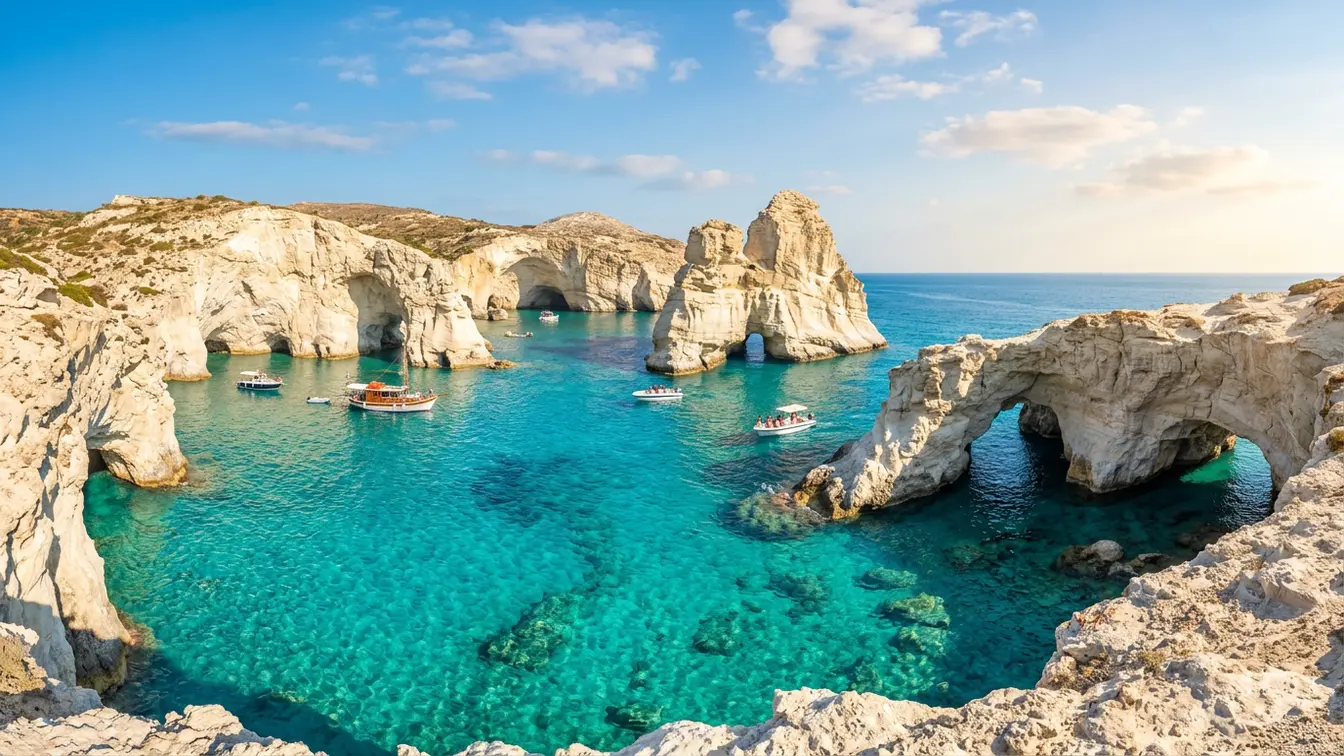
The boat tour cost about €100 per person, which adds up quickly for a family. With kids, you'd want a smaller boat tour (2-3 hours) rather than the full day - Leo and Isla would have been bored senseless after the first few hours, no matter how beautiful the scenery.
Beyond boats, Milos doesn't have a huge amount else. The main town, Plaka, is lovely for an evening wander, and the catacombs are interesting if you're into ancient history. But there are no major archaeological sites, no mountain villages to explore, no hiking trails to speak of. It's really all about the beaches and the coastline.
Naxos: Mountains, Villages, and History
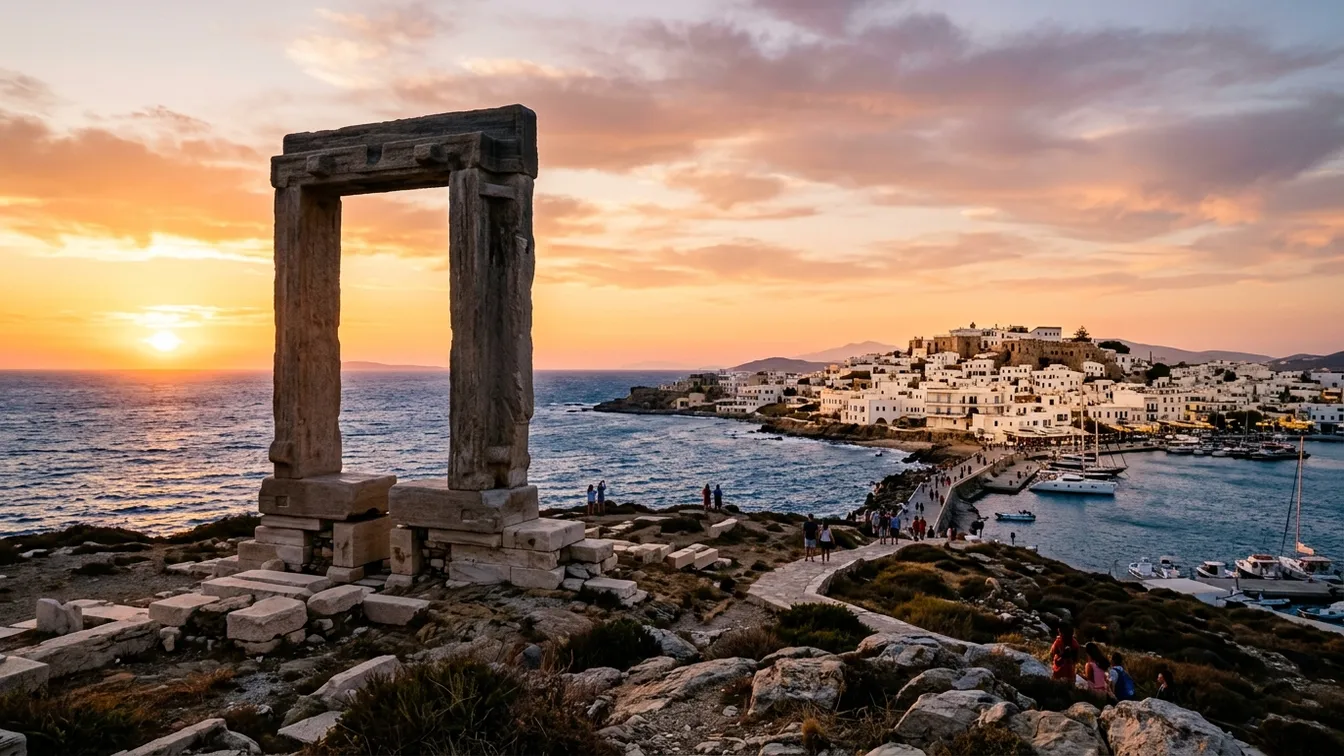
Naxos is much bigger and has far more variety. The Portara (Apollo's Gate) in Naxos Town is brilliant - a massive ancient marble doorway standing alone on a small peninsula, perfect for sunset photos. The kids loved climbing around it, and it's right in town so no special trip required.
The mountain villages in the interior are gorgeous. We drove up to Apiranthos and Filoti, wandering through marble-paved streets and stopping at tiny family tavernas where the owner's grandmother was still making the food. The villages are cooler than the coast in summer, which was a welcome break from the beach heat.
There's also proper hiking on Naxos. Mount Zas is the highest peak in the Cyclades, and while we didn't attempt it with the kids, we did some easier walks through olive groves that were lovely. The Temple of Demeter is worth a visit if you're into ancient sites - not as famous as the ones on the mainland, but interesting nonetheless.
If you're looking for our recommendations on the best time to visit Greece overall, that guide covers seasonal considerations across the whole country.
Food: What You'll Actually Eat
Both islands serve excellent Greek food, but there are differences worth knowing about.
Milos: Seafood Heaven
Milos is a fishing island through and through. The seafood is incredibly fresh - we had octopus that had been in the water that morning, grilled sea bream that fell off the bone, and local lobster pasta that Sophie still talks about. The restaurants in Pollonia (the fishing village on the northeast coast) are particularly good for seafood.
But restaurants on Milos are more spread out and often require driving to reach. There's less density of options, and fewer budget tavernas. We spent more on food on Milos than on Naxos, partly because the restaurants were more upmarket, partly because we had fewer cheap options.
Naxos: Local Specialties and Better Value
Naxos produces its own food - potatoes, cheese, meat, vegetables - so the meals feel more varied and frankly more local. The graviera cheese from Naxos is exceptional (we brought some home), and the local kitron liqueur is worth trying even if it's a bit sweet for my taste.
The loukoumades (Greek donuts) at a place in Naxos Town called Bikini were legitimately the best we've ever had. Leo declared them "better than normal donuts" which is high praise from a nine-year-old. We may have gone back three times in five days.
You'll find better value for money on Naxos. More tavernas competing for business means lower prices and lunch specials. We regularly had excellent meals for €10-15 per person including wine. On Milos, you're looking at €20-30 per person for dinner at most places.
Accommodation and Costs
Naxos wins on both fronts. There are more hotels, more apartments, more options at every price point. We found a brilliant family apartment in Naxos Town for €80 per night in shoulder season - two bedrooms, kitchen, big balcony, five minutes walk from the port.
Milos has fewer options and they're generally more expensive. The island is smaller and less developed (which is part of its charm), but it means accommodation books up faster and costs more. Expect to pay 20-30% more for comparable lodging on Milos.
Getting around: both islands require a car, but Milos requires more driving to reach beaches. We put way more kilometres on the rental car there, and the roads are rougher. Fuel costs add up. On Naxos, everything felt closer and more accessible.
The Vibe: Tourist Development and Authenticity
Milos feels more remote and less developed. Fewer tourists (though it's been discovered in recent years), smaller villages, less infrastructure. This is brilliant if you want that away-from-it-all feeling. It's less brilliant if you arrive at 2pm and need lunch but everything's closed for siesta and there's no backup option.
Naxos is more developed but not in an overwhelmingly touristy way. Naxos Town has proper supermarkets, pharmacies, banks, all the boring practical stuff you occasionally need. The inland villages still feel authentically Greek - we saw far more locals than tourists once we left the coast.
Neither island is Mykonos or Santorini in terms of tourist density. Both feel relatively unspoiled. But Naxos has better infrastructure without sacrificing the Greek island atmosphere.
Weather and Seasonality
Both islands have similar weather - hot, dry summers and mild winters. Summer (July-August) is peak season, with temperatures in the low 30s and crowded beaches. We prefer shoulder season (May-June or September-October) when it's still warm enough for swimming but less mental.
Naxos can be windy, particularly on the west coast beaches. The meltemi wind blows through the Cyclades in summer. This is actually great for windsurfing (Naxos is a popular windsurfing destination), but it can make beach days with small kids more challenging when towels keep blowing away and sand gets in everyone's eyes.
Milos is more sheltered from the wind due to its horseshoe shape. You can usually find a protected beach regardless of wind direction, which gives you more flexibility.
For more detailed guidance on Greek weather patterns, our best time to visit Greece post covers the optimal months for different travel styles.
Our Honest Verdict
If we were making the choice again today with Leo and Isla at their current ages (9 and 6), we'd go to Naxos without hesitation. Better beaches for kids, more activities beyond lying on sand, easier logistics, and better value. The kids would have a brilliant time, and Sophie and I wouldn't be stressed about access roads or whether restaurants would be open.
But I'm genuinely glad we did Milos before we had kids. It's an extraordinary island - dramatic, beautiful, and unique. I'd absolutely recommend it to couples, older families with teenagers, or anyone who loves adventure and doesn't mind working a bit harder for their beach days.
Can't decide? Here's a thought: Naxos is close enough to Milos that you could base yourself on Naxos and do a day trip to Milos (ferries take about 2 hours). You'd get a taste of both without committing fully to Milos's logistics. Not ideal, but doable if you're really torn.
The Greek islands are massive, and if you're planning a longer trip exploring multiple regions, check out our guide to the best places to visit in Italy in summer for inspiration on combining Greece with Italy in one Mediterranean adventure.
Final Practical Tips
Whatever you choose, book ferries in advance in summer. Book accommodation early too - both islands fill up. Rent a car on arrival; don't rely on buses or taxis. Bring reef shoes for rocky beaches. Pack more sunscreen than you think you need.
And remember: you can't make a bad choice here. Both Milos and Naxos are spectacular islands that'll give you a brilliant Greek holiday. One just might suit your specific situation better than the other. Choose based on who you're travelling with, what you want from your holiday, and how much logistical hassle you're willing to tolerate. Then go, enjoy the ouzo, eat too much cheese, and forget about the real world for a while.
More from 2 Idiots Travel