Best Time to Visit Greece: Month-by-Month Guide for Families (2026)
Right. So you want to know when to visit Greece. The short answer? May or October. The long answer? It's complicated, mate.
We've done Greece twice now - Naxos in June and Crete in September - and honestly, both were brilliant for completely different reasons. But ask me to go in August? No chance. Not unless someone's paying us, and even then I'd think twice.
Here's the thing about Greece: it's not one country, it's about seventeen different microclimates pretending to be one nation. Crete in April is nothing like Santorini in April. Athens in July is a completely different beast to Corfu in July. And don't even get me started on the mainland versus the islands.
So let's break this down properly, month by month, so you can work out when actually suits your family.

The Reality of Greek Tourism Seasons
Before we dive into the months, you need to understand how Greek tourism actually works. There are basically four seasons:
Dead Season (November-March): Half the islands shut down. Ferries run on skeleton schedules. It's cheap, empty, and sometimes spectacular. But also potentially miserable if the weather turns.
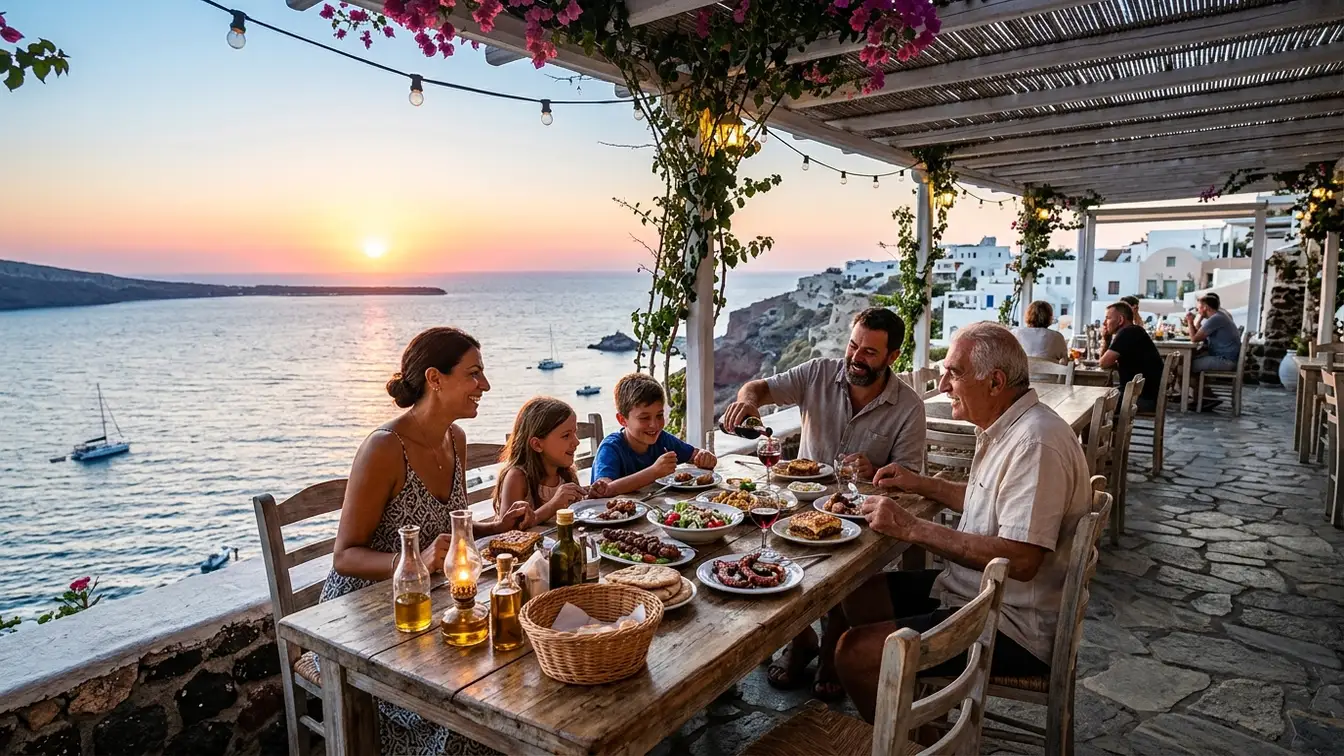
Shoulder Season (April-May, October): The sweet spot. Everything's open, prices are reasonable, weather's mostly lovely. This is where we live now.
High Season (June-early July, September): Busy but manageable. Prices up but not insane. Weather reliable. School holidays mean it's doable for families.
Peak Insanity (late July-August): Every European with two weeks off descends simultaneously. Prices double. Beaches disappear under humanity. We avoid it like Leo avoids vegetables.
Month-by-Month Breakdown
January & February: The Brave Only
Let's be honest - this is not family holiday territory. Athens? Maybe. Crete or Rhodes if you're hardy? Possibly. The smaller Cyclades islands? Absolutely not unless you enjoy staring at closed tavernas.
Weather's unpredictable. Could be 15°C and sunny. Could be 8°C and sideways rain. Sea's too cold for swimming (around 15-16°C). Ferry services are reduced, sometimes cancelled in rough weather.
The upside? Dirt cheap accommodation. Actual Greek life without the tourism veneer. Museums and archaeological sites with literally nobody else there.
But with kids? Nah. Save it for a romantic getaway when they're at university.
March: The False Start
March tricks you. You see photos of almond blossoms and think "right, spring's here!" Then you arrive and it's 12°C with a bitter wind.
That said, it's not terrible. Crete and Rhodes start waking up. Athens is genuinely pleasant - you can visit the Acropolis without melting or queuing for an hour. Wildflowers start appearing on the islands.
Temperatures: 12-17°C. Sea temperature: still freezing at 15-16°C. Tourist infrastructure: about 60% operational. Prices: low. Crowds: minimal.
Good for cultural trips to Athens or the Peloponnese. Not great for island-hopping beach holidays.
April: Getting Interesting
Now we're talking. Easter usually falls in April (Greek Orthodox Easter, often different to ours), and it's absolutely massive in Greece. If you can time it right, it's spectacular. Midnight church services, fireworks, whole lambs on spits.
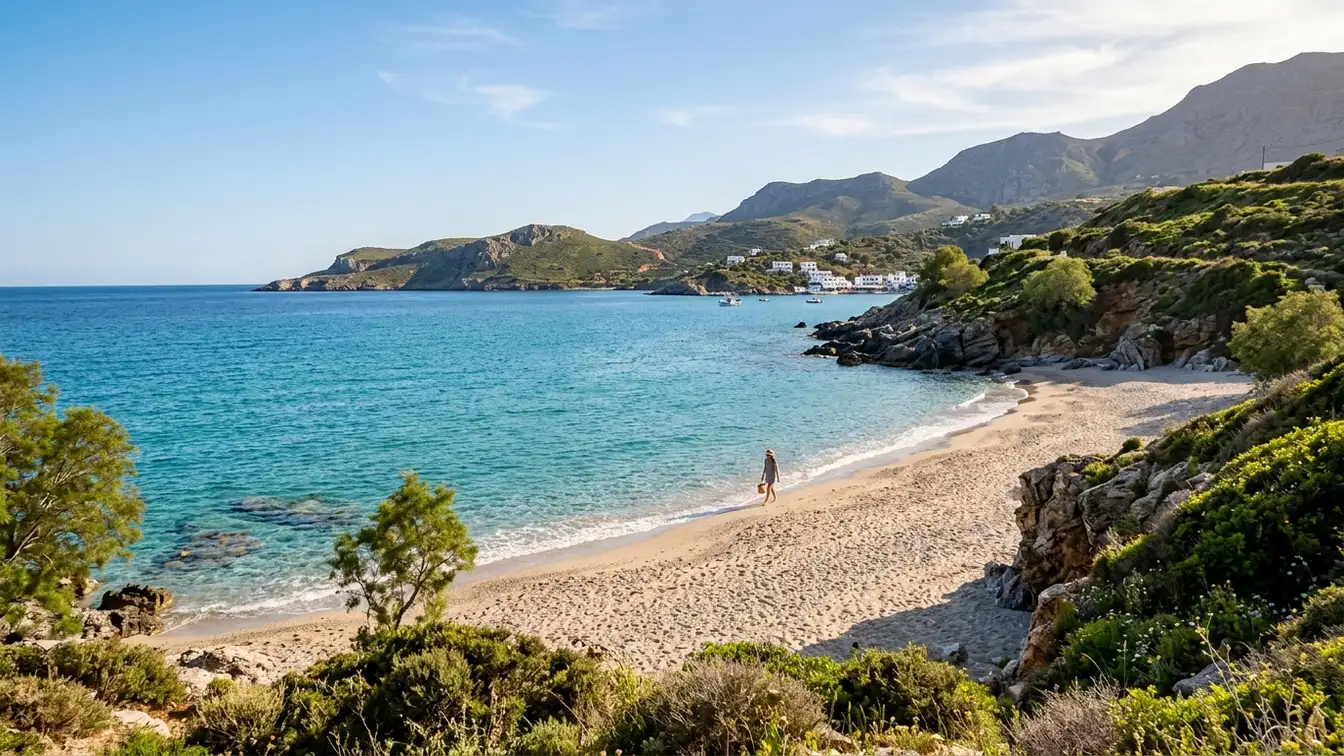
Weather starts getting reliable. Southern islands like Crete and Rhodes hit 20°C regularly. The Cyclades are still a bit fresh but opening up fast. Everything's green from winter rain, wildflowers everywhere.
Sea temperature creeps up to 17°C - still baltic for us soft Brits, but Greek kids start swimming.
Accommodation's about 40% cheaper than summer. Flights haven't hit peak pricing yet. Most tourist infrastructure is operational. The only downside? Easter week itself gets surprisingly busy with domestic tourists, and hotels jack up prices.
For families: solid option if you're not wedded to beach time. Great for exploring without the heat.
May: Our First Pick
Right, here we go. May is where Greece starts showing off properly.
Temperatures hit 20-25°C across most islands. Athens and Crete can touch 27-28°C. The sea warms to 18-20°C - still bracing, but properly swimmable if you're not completely wet.
Everything's open. Prices are pre-summer (maybe 30% less than July-August). Crowds are completely manageable. The wildflowers are still going. The light's incredible - that famous Greek golden hour without the harsh summer glare.
We reckon May's perfect for families with younger kids who don't need the water to be bathwater-warm. Book a villa with a pool and you're sorted. The beaches aren't packed yet, so you can actually find space.
Only real downside? British school half-term (late May) creates a mini-spike in prices and availability issues. Book early or avoid that week.
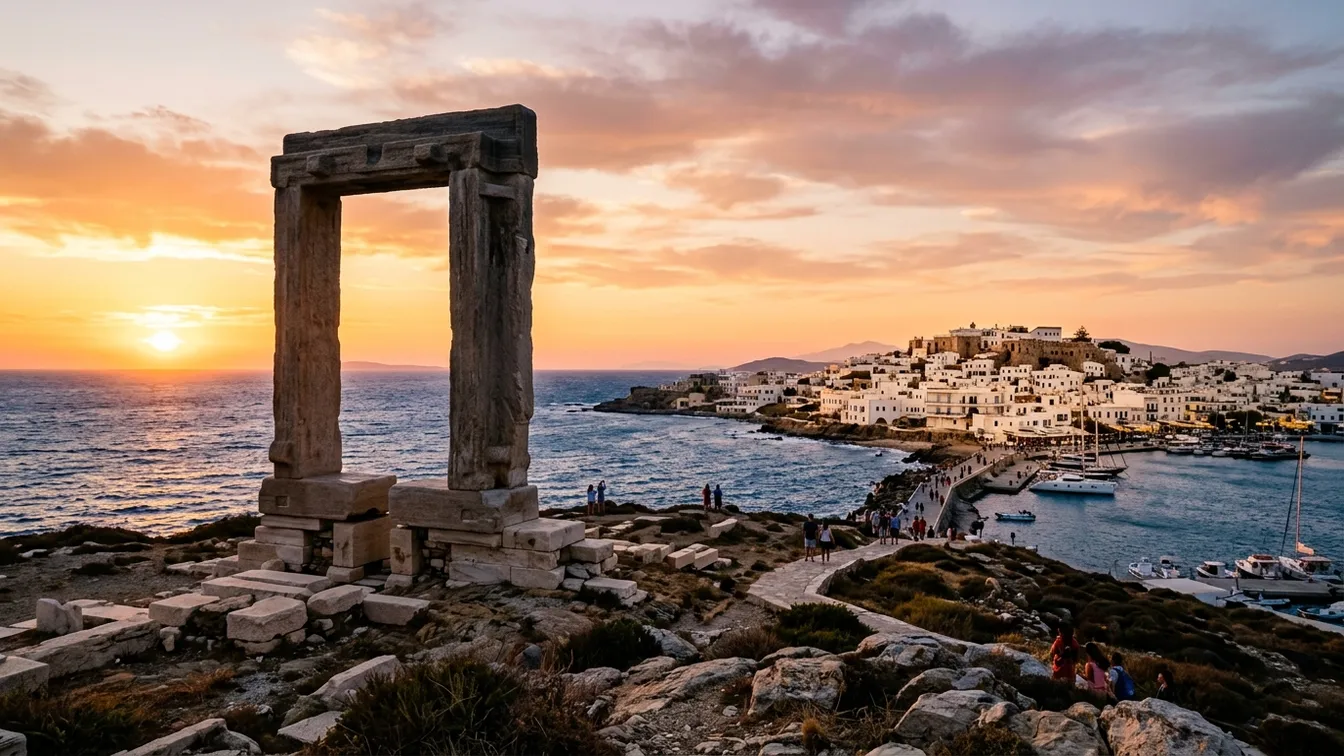
June: Where We Went to Naxos
June was our first Greek adventure - Naxos with Leo at 7 and Isla at 4. Verdict? Absolutely brilliant.
Weather's proper summer now. 25-30°C most days. Sea temperature hits 22-23°C - perfect for kids. Zero rain. Long days (sunset around 8:30pm).
It's busy but not mental. Early June especially is sweet - before the Italian and French school holidays kick in mid-month. Beaches have sunbeds but you can still find spots. Tavernas are buzzing but not overwhelmed.
Prices are up - maybe 60-70% of peak August levels. Flights start getting expensive, especially from mid-June onwards. But it's still reasonable compared to peak season.
The kids absolutely loved it. Water was warm enough for hours of swimming. Hot enough for ice cream to be essential but not so roasting that everyone's miserable by lunchtime.
If you're tied to UK school holidays, early June is your best bet. Book in February though - availability disappears fast.
July & August: Peak Madness
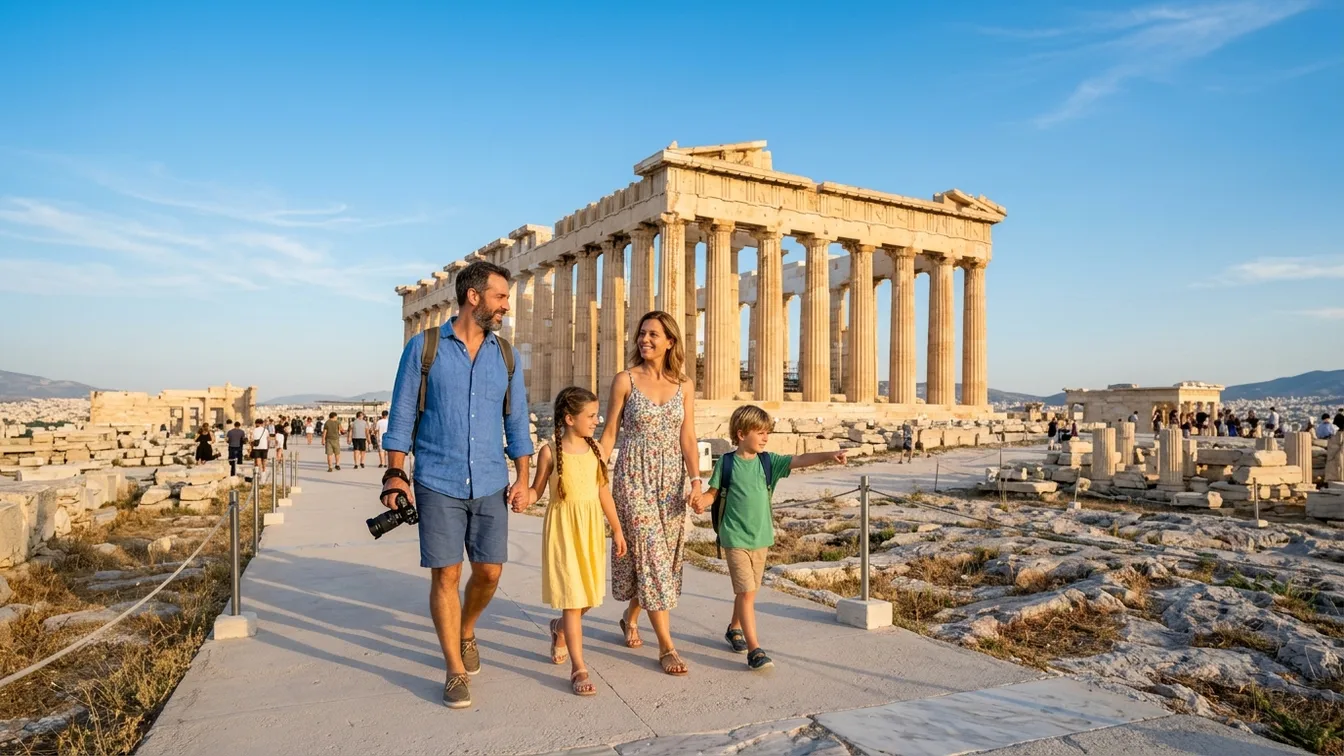
Look, I'm just going to say it: unless you have absolutely no other option, don't visit Greece in late July or August with kids.
Temperatures regularly hit 35°C. Athens can touch 40°C. It's not "oh lovely, warm weather" - it's genuinely oppressive. You can't do anything between noon and 5pm except hide indoors with air conditioning.
The islands are absolutely rammed. Every sunbed taken by 8am. Tavernas overrun. Ferry ports look like refugee camps. Popular spots like Santorini, Mykonos, and Zakynthos? Forget having any authentic experience - it's just crowd management.
And the prices. Oh god, the prices. Accommodation doubles or triples. Flights are obscene. Even the tavernas jack up their prices because they can.
Sea temperature's perfect (25-26°C), I'll give you that. And if you stick to quieter islands and have a villa with a pool, it's manageable. But honestly? You're paying double to have half the experience.
If you must go in August, target the last week. Prices drop slightly as European schools restart, and some Greeks have finished their own holidays. But it's still bloody hot.
September: Our Second Pick
September in Crete was glorious. Properly glorious.
We went mid-September, and it felt like we'd found this secret that nobody else knew about. Except obviously everyone knows about it, we're just lucky enough not to have to work around UK term times.
Weather's still summer. 25-30°C most days, cooling to 28°C by late September. Sea's at its warmest - 24-25°C, like bath water. The aggressive heat's gone but it's still proper swimming weather.
Crowds thin dramatically after the first week as European schools restart. Suddenly there's space on beaches again. Tavernas stop feeling like conveyor belts. You can get sunbeds without military planning.
Prices drop maybe 30-40% compared to August. Flights come back down to earth. Accommodation becomes negotiable again.
The light's softer than high summer - better for photos, easier on the eyes. Occasionally you'll get a day of wind or even rain, but it's rare. We had ten days of pure sunshine.
Only limitation? If you've got school-age kids, you're looking at the first week only before term starts. But that first week is still excellent - just book early because everyone with this flexibility has the same idea.
October: Still Brilliant
October's our other golden month. Early October especially is basically late September with slightly emptier beaches and cheaper prices.
Temperatures drop to 20-25°C - perfect for sightseeing and hiking. Sea temperature holds at 22-23°C through mid-October, then starts dropping. Still very swimmable, just not bathwater anymore.
By late October, some smaller island businesses start closing for winter. Ferry schedules reduce. Weather becomes less predictable - you might get rainy days.
But the upside? It's quiet. Like, actually quiet. You can visit Santorini and take photos without seventeen people in shot. Crete feels properly Greek again. Prices are 40-50% below summer peak.
October half-term (late October) creates a small spike in UK families, but nothing like the summer chaos. And honestly, even with half-term crowds, it's still quieter than June.
Great for families who want Greece without the intensity. Just maybe avoid the last week unless you're happy gambling on weather.
November: The Shutdown
November's tricky. Early November can still be lovely - 18-22°C, mostly sunny, sea around 20°C. Crete and Rhodes especially stay mild.
But by mid-November, winter arrives. Temperatures drop to 15-18°C. Rain becomes common. The Aegean gets choppy. And crucially, loads of businesses close for winter.
Smaller islands basically shut down. The Cyclades are ghost towns. Even on bigger islands, your restaurant choices shrink dramatically.
If you're doing Athens, Thessaloniki, or a cultural mainland trip, November's actually decent. Cool but not cold, cheap, empty museums. But for islands? Only consider the big ones (Crete, Rhodes, Corfu) and accept you're gambling on weather.
December: Christmas in Greece
December's either brilliant or terrible, depending on what you're after.
Athens does Christmas quite nicely - festive markets, lights, that Mediterranean winter vibe where it's 12°C but sunny. The mainland ski resorts open if you fancy something completely different.
But island beach holidays? Forget it. It's winter. Properly winter. Most places are closed. Weather's unpredictable. Sea's 16°C.
That said, if you want empty ancient sites, rock-bottom prices, and authentic Greek winter experience, December delivers. Just don't expect a beach holiday.
Regional Variations Worth Knowing
Greece isn't uniform. Crete's about two weeks ahead of the Cyclades season-wise. Rhodes and the Dodecanese are warmer than the northern islands. Corfu and the Ionian islands get more rain but stay greener.
The Cyclades (Santorini, Mykonos, Naxos, Paros) are gorgeous but exposed to the meltemi wind in summer. That wind can be a blessing (cools things down) or annoying (beach days ruined).
Crete's big enough to have microclimates. South coast's warmer and drier than north. You can literally drive 40 minutes and find completely different weather.
Athens is an urban heat island. Add 3-5°C to any island temperature forecast. Summer in Athens is genuinely brutal.
Our Verdict: When We'd Go
If we're being completely honest? We'd pick early May or late September every single time.
May gives you that fresh, green, wildflower Greece before summer bleaches everything. September gives you peak weather with summer's chaos gone. Both offer that sweet spot of weather, prices, and crowds that makes family travel actually enjoyable rather than endurance.
Early June and early October are our second tier - still excellent, just slightly more compromised on either weather (October) or prices (June).
If you're locked into UK school holidays? Early June, definitely. Yes, it's pricier, but it's worth every penny compared to July-August. Or grab those first few days of September before term starts - fight the school for permission if you have to.
And if someone offers you a free villa in August? Take it. But book villa with pool, plan for doing absolutely nothing between noon and 5pm, and maybe question whether they're really your friend.
Greece is spectacular whenever you visit, honestly. But timing it right means you actually enjoy the experience rather than just surviving it. And with kids, that difference matters.
Now, if you'll excuse me, I need to go convince Sophie that we need to "research" Greece again this May. For the blog, obviously. Purely professional.
For more Greek islands comparisons, check out our guide to Milos vs Naxos to help choose your island base.
More from 2 Idiots Travel