We weren't expecting much from Oman. Another Gulf state with shiny buildings and artificial attractions, right? Turns out we were spectacularly wrong. Oman is what happens when you take dramatic desert landscapes, ancient forts, turquoise wadis, and genuinely welcoming people, then resist the urge to build a bloody indoor ski slope.
We spent two weeks exploring Oman's tourist places last November, from Muscat's mosques to desert camps under impossible stars. Leo (9) declared it "better than Dubai" within three days, which says everything you need to know. Here's our complete guide to the best places to visit in Oman.
Muscat isn't trying to be Dubai or Abu Dhabi, and that's precisely why it's brilliant. The capital feels more like a traditional Arabian port city that happens to have decent infrastructure rather than a sterile modern metropolis.
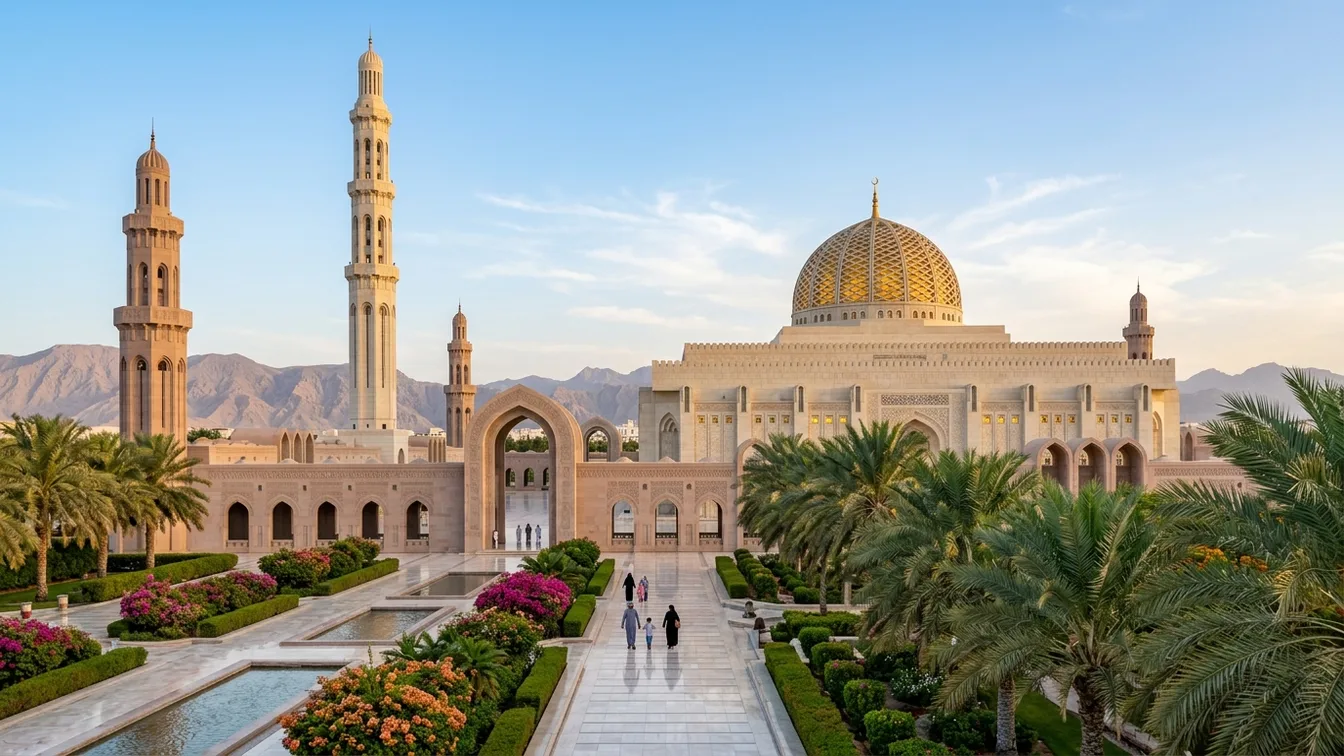
We've seen our share of grand mosques across the Middle East, but this one genuinely took our breath away. The Sultan Qaboos Grand Mosque accommodates 20,000 worshippers and features the world's second-largest hand-woven carpet. Sophie spent fifteen minutes just staring at the main chandelier, which contains 1,122 Swarovski crystal lights.
Non-Muslims can visit Saturday through Thursday, 8am to 11am. Dress modestly (women need headscarves, long sleeves, and trousers). The kids were surprisingly engaged--turns out massive Persian carpets and chandeliers hold universal appeal. Free entry, which makes it even better.
If you want the "authentic Arabia" experience without the aggressive hassle, Mutrah Souq delivers. It's atmospheric without being overwhelming, with covered alleyways selling everything from frankincense to curved daggers (khanjars).
We bought silver bracelets for about a third of what they'd cost in London. The trick is mild disinterest followed by starting to walk away. Works every time. Leo's still wearing his leather wristband daily, which at £3 makes it possibly the best-value souvenir we've ever bought.
Go late afternoon when it's cooler. The waterfront Corniche nearby is perfect for evening strolls, with plenty of shawarma stands when the kids inevitably announce they're "literally starving."
Nizwa sits about 90 minutes' drive from Muscat and served as Oman's capital for centuries. The fort is the obvious draw, but the Friday morning livestock market is where things get properly interesting.
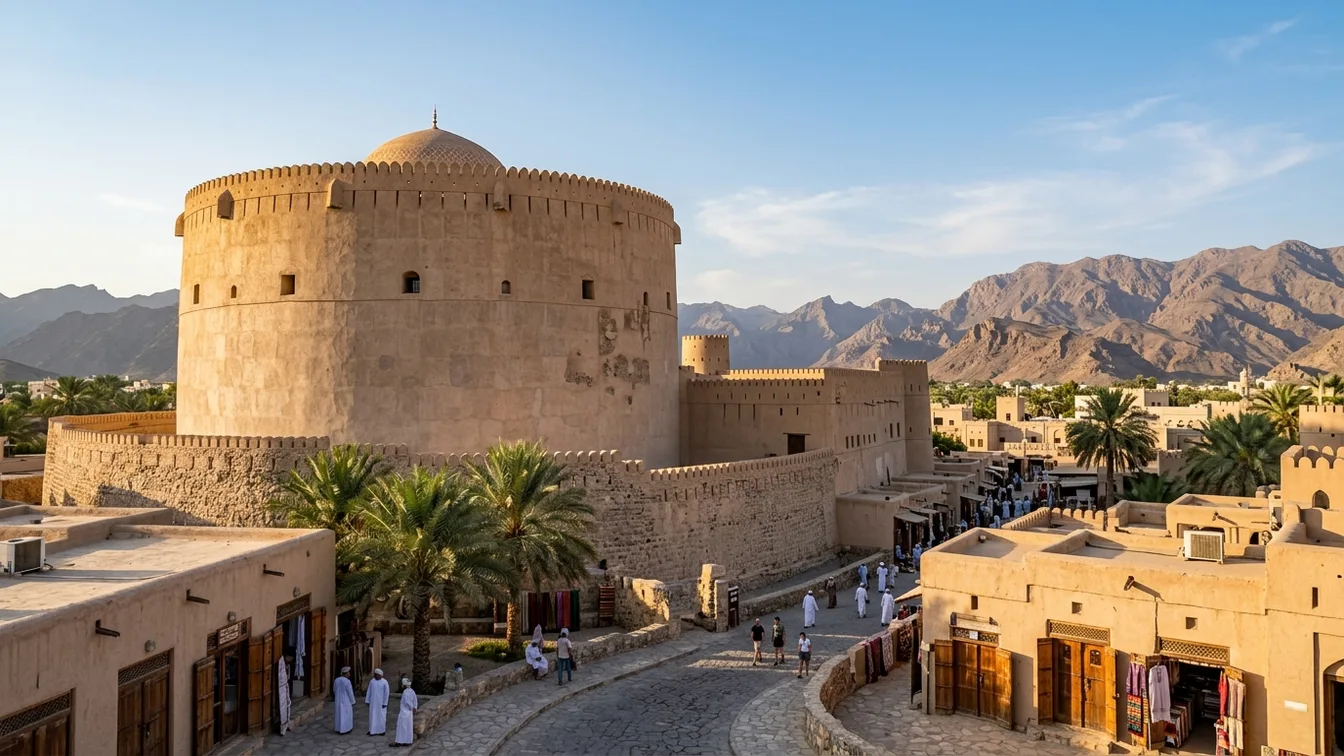
Built in the 1650s, Nizwa Fort features a massive cylindrical tower that's surprisingly entertaining to explore. Stone staircases wind upward through deliberately confusing passages (defense mechanisms), with various rooms showing traditional Omani life.
The kids loved the trap doors designed to pour boiling date syrup on invaders. We loved the 360-degree views from the top, showing the surrounding date plantations and Hajar Mountains. Entry costs 5 OMR (about £10) per adult, kids under 12 free.
Get there before 8am if you want to see the actual livestock trading. Hundreds of goats, sheep, and cattle being haggled over in rapid Arabic while everyone drinks tiny cups of kahwa (Omani coffee with cardamom).
It's chaotic, dusty, and absolutely fascinating. Isla made friends with a goat that kept trying to eat her shoelaces. The surrounding souq sells dates, honey, pottery, and traditional halwa (Omani sweet). We bought a kilo of fresh dates for 2 OMR that were better than any we've tasted before or since.
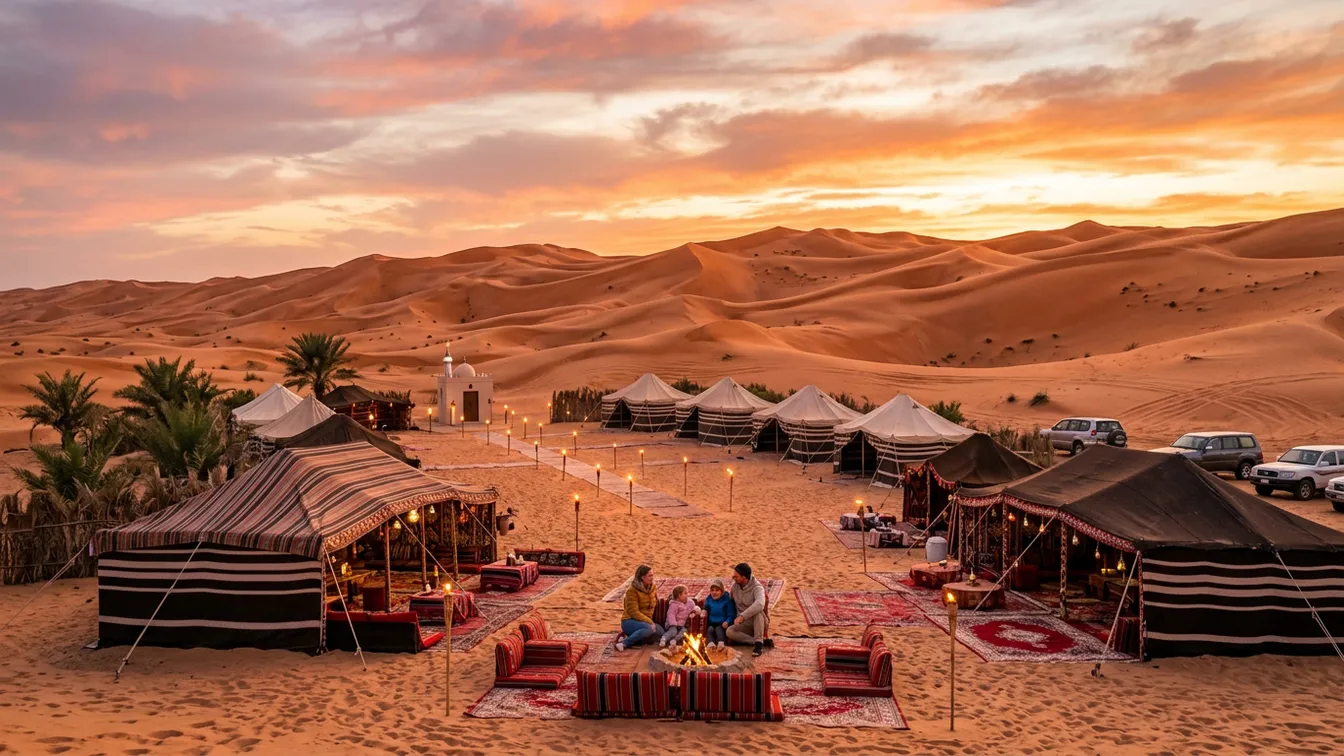
The Wahiba Sands (also called Sharqiya Sands) stretch for about 180km of proper Arabian desert. We spent two nights at a traditional Bedouin-style camp, which ranks among our best family travel experiences ever.
Our 4x4 transfer from the highway included dune bashing that had the kids squealing with delight and Sophie gripping the door handle. The camp itself offered private tents with proper beds (not glamping luxury, but comfortable), shared bathroom facilities, and a communal dining area.
Sunset over the dunes is mandatory photography time. We climbed the nearest big dune, watched the sand turn from gold to pink to deep orange, then stayed for stargazing once darkness fell. Zero light pollution means you see the Milky Way properly--Leo counted seven shooting stars before we made him sleep.
Cost: approximately 150-200 OMR per family for overnight including meals and transfers. Book through your hotel or accommodation in Muscat or Nizwa. November through March is perfect; avoid summer unless you fancy temperatures exceeding 45°C.
Sandboarding down the dunes worked brilliantly despite none of us having any technique. Think snowboarding but warmer and more forgiving. The camp provided boards included in the price. Leo managed to faceplant spectacularly while attempting a jump, which naturally became the trip highlight according to him.
Camel rides are available but felt slightly touristy for our taste. We took a sunset desert walk instead, learning about desert plants and Bedouin survival techniques from our guide Ahmed. Much more interesting than bobbing along on a camel for fifteen minutes.
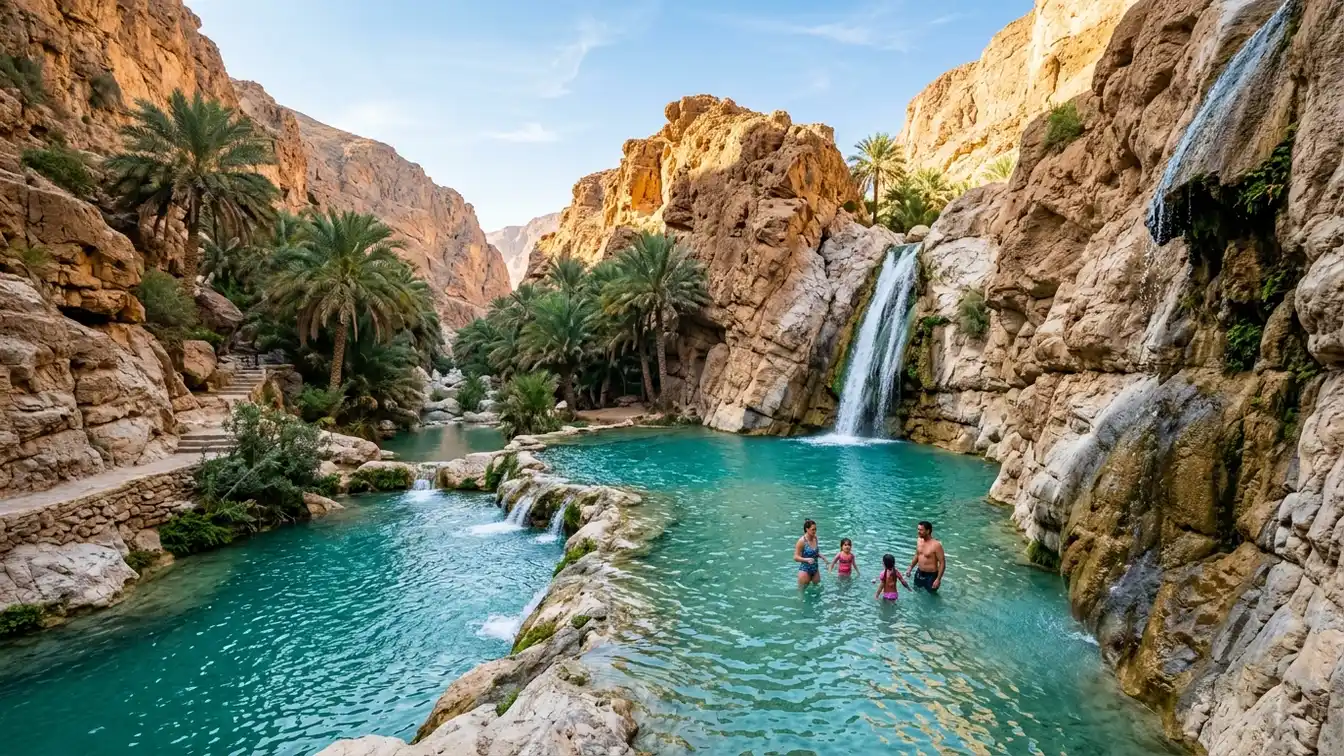
Wadi Shab combines hiking, swimming, and canyon exploring into one brilliant day trip. Located about 90 minutes from Muscat along the coast road toward Sur, it's become increasingly popular but remains manageable if you arrive early.
Start with a 2 OMR boat crossing (takes three minutes), then hike about 45 minutes through the wadi. The path follows pools of crystal-clear turquoise water, with date palms and oleander flowers providing shade. It's relatively easy walking on well-maintained paths, though you'll cross the water several times.
The final section requires swimming through a narrow canyon to reach a hidden waterfall inside a cave. Sophie's claustrophobia nearly won, but she pushed through (with significant swearing under her breath). The reward is swimming under the waterfall in an enclosed rock chamber with sunlight filtering through above.
Wear proper water shoes--the rocks are slippery. We brought dry bags for phones and valuables. Pack the kids' swimming stuff in waterproof bags as you're essentially carrying everything while wading and swimming.
Go early morning (be there by 8am) or late afternoon. Midday in summer is brutally hot. We visited in November and it was perfect. Bring plenty of water and snacks. There's a small cafe at the boat crossing but nothing else.
Allow 3-4 hours total including swimming time. The hike out feels longer because you're tired, wet, and Leo will definitely complain about his legs hurting despite being perfectly fine on the way in.
Jebel Shams ("Mountain of the Sun") reaches 3,009 meters, making it Oman's highest peak. The drive up requires a 4x4, with increasingly dramatic switchbacks revealing Wadi Ghul far below--often called Oman's Grand Canyon.
We did the Balcony Walk, a relatively easy trail along the canyon rim offering ridiculous views. About 2-3 hours round trip, mostly flat, with sheer drops that had Sophie walking on the inside edge muttering about safety barriers.
The abandoned village of As Sab clinging to the canyon wall halfway through adds historical interest. People lived here until the 1970s, somehow farming on vertical terraces. Isla asked approximately forty-seven questions about how they got their goats down.
Temperature drops significantly at altitude--bring layers even if it's hot in Muscat. Several resort hotels at the summit offer lunch with views if you don't fancy camping. We stopped at Jebel Shams Resort for coffee and cardamom cake, both excellent.

Ras Al Jinz beach hosts one of the world's largest green turtle nesting populations. Around 20,000 turtles come ashore annually to lay eggs, making it one of Oman's must-see tourist places if you're visiting between May and October (peak season).
We visited in November, technically shoulder season, but still saw three turtles during our guided night tour. The reserve strictly controls access--you must book through Ras Al Jinz Turtle Reserve (50 OMR per adult, 25 OMR per child). Tours run at night (8:30pm) and pre-dawn (4:30am).
Watching a massive green turtle laboriously dig her nest, lay over a hundred eggs, then cover everything before returning to the sea was genuinely moving. The kids stayed silent throughout, which might be the most impressive part. Rangers use red lights that don't disturb the turtles, explaining the process in whispers.
Book well ahead during summer peak season. The attached Turtle Reserve hotel offers comfortable rooms right on the beach if you want to do both evening and morning tours. Worth staying overnight--the reserve beach at sunrise is stunning.
Salalah, in Oman's southern Dhofar region, transforms during khareef (monsoon season, mid-June to mid-September) when Indian Ocean monsoons turn the landscape lush green. Waterfalls appear, wadis flow, and temperatures drop to pleasant mid-20s while the rest of Arabia bakes.
We haven't visited during khareef but have Omani friends who rave about it. Outside monsoon season, Salalah offers frankincense souqs, beautiful beaches, and the ancient ruins of Al Baleed Archaeological Park. It's a 90-minute flight from Muscat or a seriously long drive (1,000km).
Worth considering if you're visiting Oman between June and September when the north is scorching. Many Gulf families holiday in Salalah during khareef specifically for the cooler, greener conditions.
October through March is ideal, with November and December perfect for most outdoor activities. We visited mid-November and had daytime temperatures around 28-30°C in Muscat, cooler in the mountains, still warm enough for swimming at wadis and beaches.
January and February can get surprisingly cool in the evenings, especially in the desert. March through May gets progressively hotter but remains manageable for most activities if you start early.
Avoid June through September unless you're heading to Salalah for khareef. Summer temperatures regularly exceed 40°C (104°F), making outdoor activities genuinely unpleasant. Some tourist places like certain wadis become less appealing when the water levels drop.
Ramadan timing varies annually--check dates before booking. Most restaurants close during daylight hours, though hotels serve guests. Tourist sites remain open with adjusted hours.
You need a rental car, preferably 4x4. Public transport exists but isn't practical for reaching most interesting locations. Roads are excellent, driving is easy (though aggressive), and petrol costs about a third of UK prices.
We rented a Toyota Land Cruiser for two weeks at about 40 OMR (£80) per day. Worth every rial for accessing Wahiba Sands, Jebel Shams, and various wadis. Smaller 2WD vehicles work for Muscat, Nizwa, and main highways but limit your options.
Google Maps works perfectly throughout Oman. Download offline maps anyway for mountain areas with patchy signal. Omanis are remarkably helpful if you need directions--we were lost once near Nizwa and had three different people stop to help within five minutes.
Oman exceeded expectations in ways we didn't anticipate. It's the Middle Eastern destination that feels genuinely authentic while still offering proper infrastructure and safety. The landscapes rival anything we've seen elsewhere--wadis, deserts, mountains, and coastline all easily accessible.
Family-friendly without being sanitised. Culturally rich without being difficult. Affordable compared to neighbouring UAE. And remarkably welcoming--Leo's still pen pals with Ahmed from our desert camp, which is rather lovely.
Two weeks felt right for covering major tourist places without rushing. Ten days works if you skip either Salalah or some northern wadis. Less than a week means choosing between mountains or desert rather than experiencing both.
For more Middle Eastern family travel inspiration, check out our guide to Greece or our complete Tokyo with kids itinerary. If you're planning more desert adventures, our Portugal surf camps guide offers different terrain but similar family appeal.
Oman's tourist places deliver everything the travel brochures promise without the usual disappointment factor. Which, coming from us, is about the highest praise we give anywhere. Just go before everyone else figures out how good it actually is.